丨 Specification parameters
|
Specification parameters
|
|
Antenna
characteristics
|
1
|
working frequency
|
GPS: L1, L2, L5
BDS: B1I, B2I, B3I, B2a, B2b
GLONASS: L1, L2, L3
Galileo: E1, E5b, E5a, E6
QZSS: L1, L2, L5, L6
IRNSS: L5
|
|
2
|
frequency range
|
1176-1278/1559-1612MHz
|
|
3
|
V. S.W.R (standing wave ratio)
|
≤2.0
|
|
4
|
Axis ratio
|
Elevation angle of 90 degrees: ≤ 3, elevation angle of 15 degrees: ≤ five
|
|
5
|
gain
|
Elevation angle of 90 degrees: ≥ 6, elevation angle of 20 degrees: ≥ 0 dB
|
|
6
|
Before and after comparison
|
± 60 degrees ≥ 15dB
|
|
7
|
Phase center (mm)
|
<2
|
|
8
|
impedance
|
50Ω
|
|
9
|
Polarization mode
|
RHCP
|
|
10
|
Out of band inhibition
|
1268+100MHZ≥50db,
1170-100MHZ≥50db,
1602+100MHZ≥50db,
1561-100MHZ ≥50db.
|
|
LNA
|
1
|
LNA gain
|
38±2dB
|
|
2
|
V. S.W.R (standing wave ratio)
|
<2
|
|
3
|
Flatness within the band
|
±2dB
|
|
4
|
Noise coefficient
|
<2.0
|
|
5
|
DC power supply
|
3.3~5.5V
|
|
6
|
Working current
|
<35 mA
|
|
Mechanical
structure
|
1
|
Component Name
|
SPEC
|
| 2 |
Installation method
|
Threaded connection
|
| 3 |
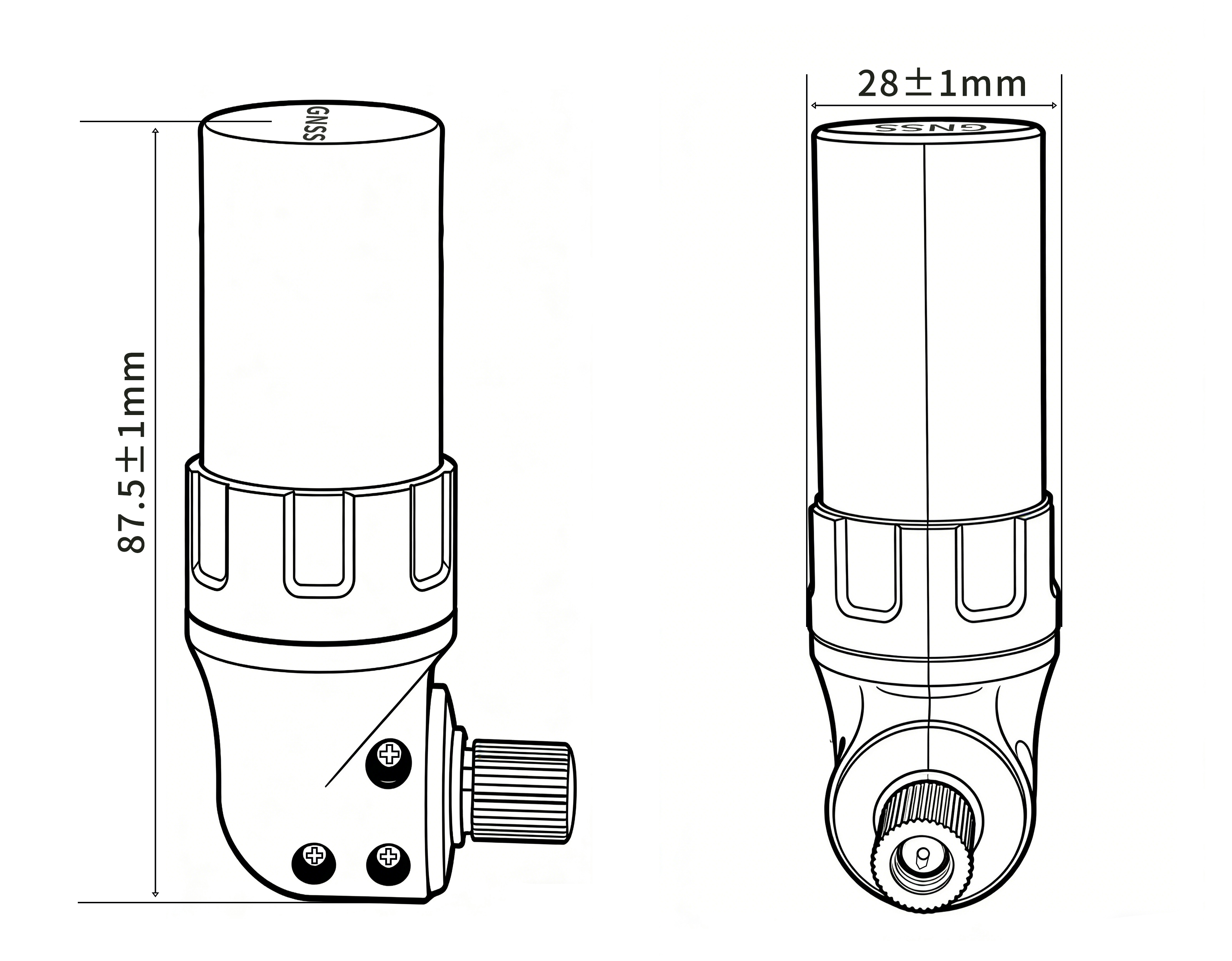
Antenna size
|
Φ87.5*28mm
|
| 4 |
Product weight
|
37.4g
|
| 5 |
RF output interface
|
SMA-J
|
| 6 |
Antenna casing
|
ABS+PC
|
|
Environmental
|
1
|
working temperature
|
-40℃~+85℃, 10%~95% RH
|
|
2
|
Storage temperature
|
-55℃~+100℃, 10%~95% RH
|
|
3
|
shock
|
Sine scan @ 1.5mm AM, 10~55Hz per axis
|
Packaging and Delivery:

Product Advantages
Optimized Design for Compact Integration and Durability
The antenna’s quadrifilar helix antenna architecture is engineered to maximize gain while reducing size and weight, critical for UAV payload and handheld device constraints. The oblique-angle orientation enhances reception where line-of-sight signals are obstructed, increasing effective coverage. The modular design featuring a threaded SMA-J connector allows rapid installation or replacement, supporting diverse system environments. Encased in robust ABS+PC, it withstands temperature extremes and mechanical stress, ensuring longevity and dependable operation. This design emphasis supports streamlined integration into challenging platforms without compromising GNSS signal quality, fulfilling both portability and robustness standards required by professionals.
High-Performance Reception Delivering User Confidence and Accuracy
Users benefit from a high-gain uav rtk antenna facilitating exceptional satellite tracking and multi-band reception that maintain centimeter-level accuracy. The built-in low-noise amplifier reduces interference impacts, improving signal integrity even in signal-challenging conditions typical of urban or wooded areas. Its lightweight profile minimizes device burden, enhancing portability for field users. Clear polarization characteristics and precise impedance matching assure consistent data quality, supporting both static and dynamic positioning tasks. This combination of factors delivers an intuitive and reliable experience, fostering greater operational precision and confidence among users relying on handheld and airborne GNSS technology.
Use Scenarios
Precision Mapping with Handheld Devices in Geospatial Surveys
In geospatial survey environments, handheld GPS devices equipped with this precise handheld gps antenna enable technicians to capture accurate location data quickly. The antenna’s multi-constellation and multi-frequency support improve signal reception in complex terrains such as urban canyons or forested areas, enhancing survey accuracy and reducing the need for repeat measurements. Its lightweight form allows convenient mobility during extended fieldwork sessions. Integration with RTK correction signals ensures centimeter-level positional accuracy essential for mapping, land assessment, and construction planning. This antenna streamlines workflows by delivering reliable satellite communication critical for efficient survey operations.
Enhancing UAV Navigation and Data Acquisition Accuracy
In UAV applications, deploying this compact uav rtk antenna facilitates real-time kinematic positioning vital for flight stability and data precision. Its quadrifilar helix design promotes superior signal acquisition at oblique angles, overcoming typical aerial multipath issues and signal blockages encountered during missions. UAVs used for agriculture, infrastructure inspection, or environmental monitoring rely on this antenna to maintain consistent multi-system GNSS connectivity, ensuring accurate waypoint navigation and high-resolution data collection. Integration into drone systems promotes smooth operation within existing flight control platforms, optimizing performance and mission outcomes through enhanced positional feedback.
FAQ
What makes the AK157 a reliable choice for UAV RTK applications?
Our uav rtk antenna AK157 features a quadrifilar helix design with a built-in low-noise amplifier and dual-stage filtering. This ensures strong, multi-constellation signal reception even at low elevation angles, providing consistent centimeter-level accuracy crucial for UAV navigation and data collection.
Can I customize the antenna for specific handheld GPS devices?
Yes, we offer flexible OEM/ODM customization services for our handheld GPS antenna products. Our R&D team works closely with customers to adapt the AK157’s form factor and interface, making integration into various handheld devices smooth without sacrificing performance.
How do I install the AK157 antenna on my equipment?
The AK157 uses a threaded connection with an SMA-J RF output (50 Ω impedance) for easy and secure installation. Its compact size (Φ87.5×28 mm) and light weight (37.4 g) make it convenient for handheld or UAV mounting while maintaining stable signal quality.
What quality assurance measures support your GNSS helical antenna products?
We conduct strict multi-stage quality control including SMT production, full functional testing, and 100% final inspection. Our buy GNSS helical antenna customers benefit from ISO9001:2015-certified processes and compliance with CE and RoHS standards, ensuring dependable, long-lasting antenna performance.





